Self-Ligating Brackets: Advantages and How They Work
Discover self-ligating brackets, a modern technology that can reduce treatment time and improve patient comfort.

By Dr. David Benguira, Orthodontic Specialist
Orthodontics is constantly evolving, and self-ligating brackets represent one of the most significant advances in recent years. This modern technology offers concrete advantages for patients undergoing treatment.
What is a Self-Ligating Bracket?
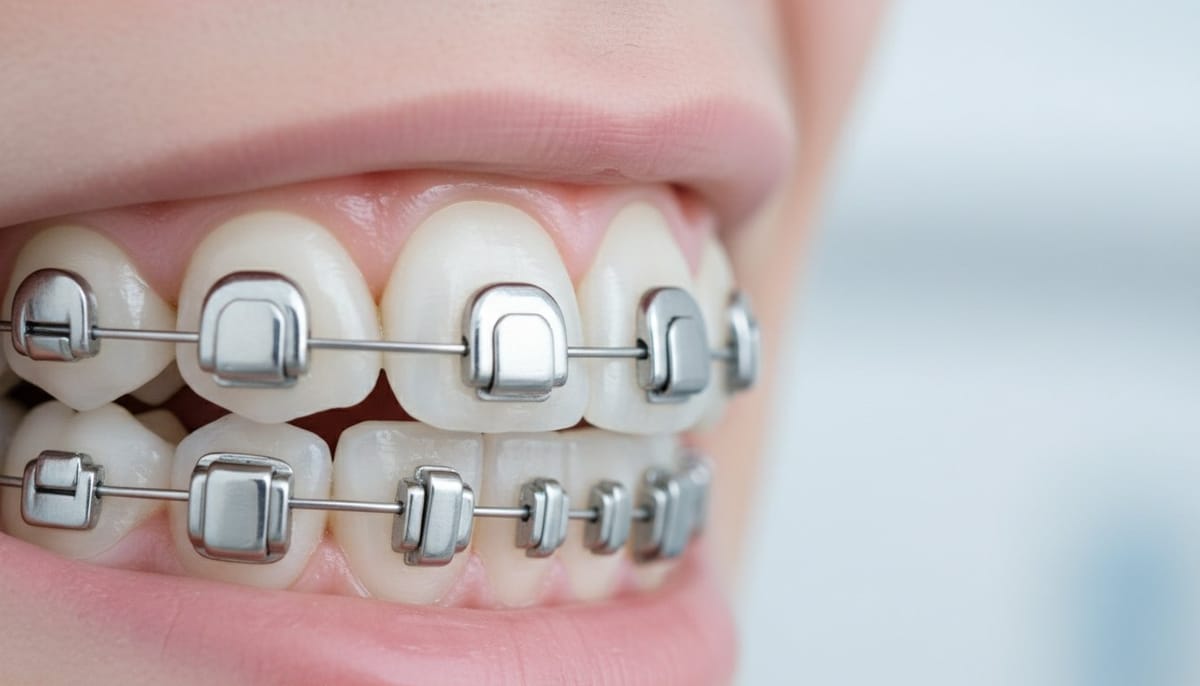
Traditional brackets use elastics or metal ligatures to hold the orthodontic wire in place. Self-ligating brackets, on the other hand, have a built-in closing mechanism – a small door or clip that retains the wire without requiring elastics.
How Do They Work?
The principle is simple but ingenious:
- An integrated clip opens and closes to insert or release the wire
- The wire slides freely in the bracket with less friction
- Forces are lighter and more continuous
- Tooth movement is more physiological
Advantages for Patients
1. Shorter Appointments
Without elastics to remove and replace, adjustments are faster. Your appointments generally take less time.
2. Improved Comfort
Lighter, more continuous forces generally mean:
- Less uncomfortable pressure after adjustments
- Reduced post-appointment pain
- Faster adaptation
3. Better Hygiene
The absence of elastics means:
- Fewer plaque retention areas
- Easier brushing
- Healthier gums during treatment
4. Potential for Faster Treatment
In some cases, friction reduction allows:
- More efficient tooth movement
- Possibility of reducing total treatment time
- Fewer adjustment appointments
5. Fewer Repairs
Without elastics that can break or discolor, there are fewer reasons for emergency visits.
Types of Self-Ligating Systems
Several systems exist on the market:
Passive Systems
The wire moves freely in the bracket. Ideal for initial alignment phases with very light forces.
Active Systems
The clip exerts slight pressure on the wire. Offers more control for finishing movements.
Interactive Systems
Combine the advantages of both approaches depending on the treatment phase.
Ceramic Self-Ligating Brackets
For aesthetically-conscious patients, self-ligating brackets also come in translucent ceramic versions. They combine:
- The discretion of aesthetic brackets
- The efficiency of self-ligating technology
- A popular option among adults and teenagers
Who Are They Suitable For?
Self-ligating brackets are suitable for most orthodontic cases:
- Mild to severe crowding
- Spaces between teeth
- Bite problems
- Complex cases
However, every patient is unique. During consultation, we assess whether this technology is the best option for your specific situation.
Comparison with Traditional Brackets
| Aspect | Self-Ligating | Traditional |
|---|---|---|
| Appointment duration | Shorter | Longer |
| Friction | Reduced | Higher |
| Hygiene | Easier | More demanding |
| Comfort | Improved | Variable |
| Cost | Slightly higher | Standard |
Our Approach
At the Orthodontic Center, we use the technologies most suited to each patient. Self-ligating brackets are part of our therapeutic arsenal, alongside other options like Invisalign and lingual orthodontics.
The choice of system depends on several factors: the nature of your malocclusion, your aesthetic preferences, your lifestyle, and your treatment goals.
Conclusion
Self-ligating brackets represent a significant evolution in orthodontics. They offer patients potentially more comfortable, more hygienic, and sometimes faster treatment. If you're considering orthodontic treatment, let's discuss together the option that suits you best.
Schedule a free consultation at the Orthodontic Center of Dr. David Benguira and discover treatment options suited to your situation.