Modern Orthognathic Surgery: When 3D Technology Revolutionizes Results
Discover how 3D planning revolutionizes jaw surgery and what non-surgical alternatives exist to correct jaw misalignments.


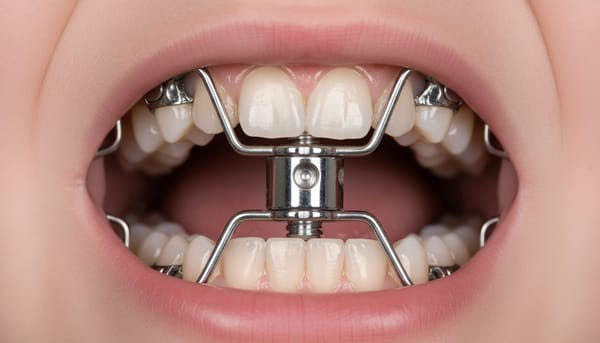
For some patients, orthodontics alone isn't enough to correct a significant jaw misalignment. Orthognathic surgery, combined with 3D planning technologies, now delivers remarkably precise results. Discover when this procedure is necessary and what alternatives exist.
What is Orthognathic Surgery?
Orthognathic surgery (from Greek "orthos" = straight and "gnathos" = jaw) is a procedure aimed at repositioning the jaws when they present a significant misalignment that cannot be corrected by orthodontics alone.
This surgery treats problems such as:
- Prognathism: lower jaw too far forward
- Retrognathism: lower jaw too far back
- Facial asymmetry: lateral jaw misalignment
- Open bite: inability to close front teeth
- Severe sleep apnea: jaw advancement is curative in over 95% of cases
The 3D Planning Revolution
Once planned using 2D images and plaster molds, orthognathic surgery now benefits from 3D virtual surgical planning (VSP) that completely transforms the approach.
Benefits of 3D planning:
- Millimetric precision: movements calculated to the tenth of a millimeter
- Preoperative visualization: patients see their future face before surgery
- Custom surgical guides: 3D printed for perfect execution
- Reduced surgical time: fewer anesthesia-related risks
- Predictable results: +42% surgical success according to recent studies
At Dr. Benguira's Orthodontic Centre, our state-of-the-art CBCT imaging enables optimal collaboration with maxillofacial surgeons to plan these complex procedures.
What Does the Treatment Path Look Like?
1. Preparatory orthodontic phase (12-18 months)
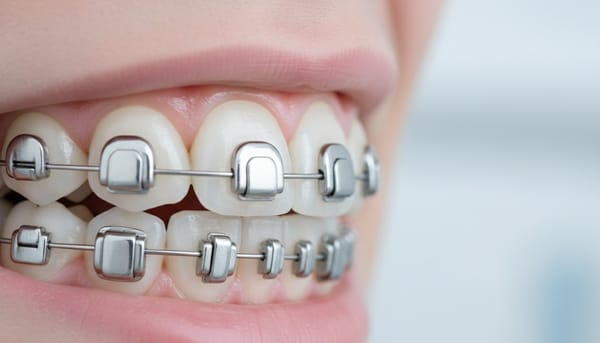
The orthodontist aligns teeth in each jaw individually, preparing the ground for surgery.
2. 3D planning and surgery
The surgeon uses digital data to precisely reposition the jaws. The procedure takes 2-4 hours under general anesthesia.
3. Final orthodontic phase (6-12 months)
Fine adjustments to perfect the bite and stabilize results.
Are There Non-Surgical Alternatives?
In some moderate cases, alternatives may be considered:
- Camouflage orthodontics: dental compensation for skeletal misalignment
- Orthodontic mini-screws (TADs): enable otherwise impossible movements
- Botox/hyaluronic acid injections: temporary minor aesthetic corrections
However, for significant misalignments, only surgery provides a complete and lasting correction, both functionally and aesthetically.
Frequently Asked Questions
Is the surgery painful?
The procedure is performed under general anesthesia. Recovery involves swelling and discomfort for 2-3 weeks, well managed with medications.
Are there visible scars?
No, all incisions are made inside the mouth.
When can activities resume?
Generally 2-3 weeks for work, 6-8 weeks for sports.
Think you might need orthognathic surgery?
Book a complete evaluation with 3D imaging. We'll explain all your options.
Clinics in Montreal (Queen Mary) and St-Eustache (North Shore)